
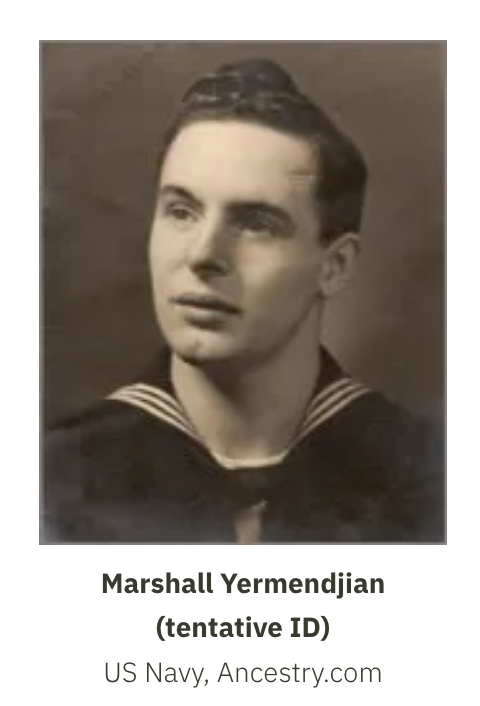
Marshall Yermendjian:
Living in a Troubled Century
Marshall Yermendjian described himself as a “rank and file” International volunteer in the Spanish Civil War. Yet, his story is also a testimony to larger events in the turbulent early twentieth century.
His Father and the Armenian Genocide
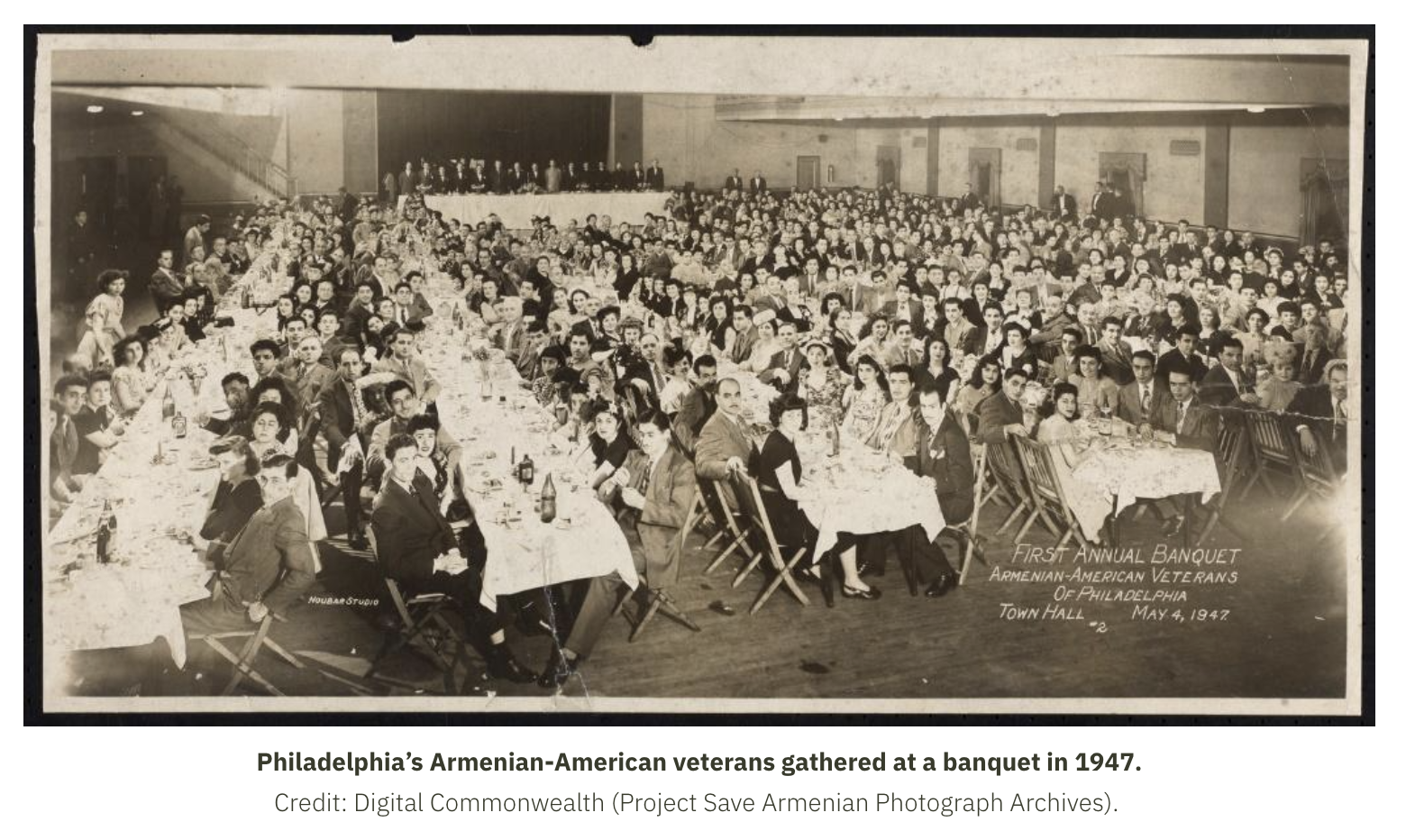
Marshall Yermendjian was born in Philadelphia, Pennsylvania, in 1916. His father, Arsen Yermendjian, had come to Philadelphia from the city of Adana, then in the Ottoman Empire. Arsen belonged to the Armenian Christian minority within this Muslim empire. As the power of the Ottoman Empire declined, it was challenged in 1908 by a coalition of revolutionary forces—the Young Turks—who were seeking reforms and a nationally unified state. During this period of political instability, the Armenian community was perceived as a threat to national unity.
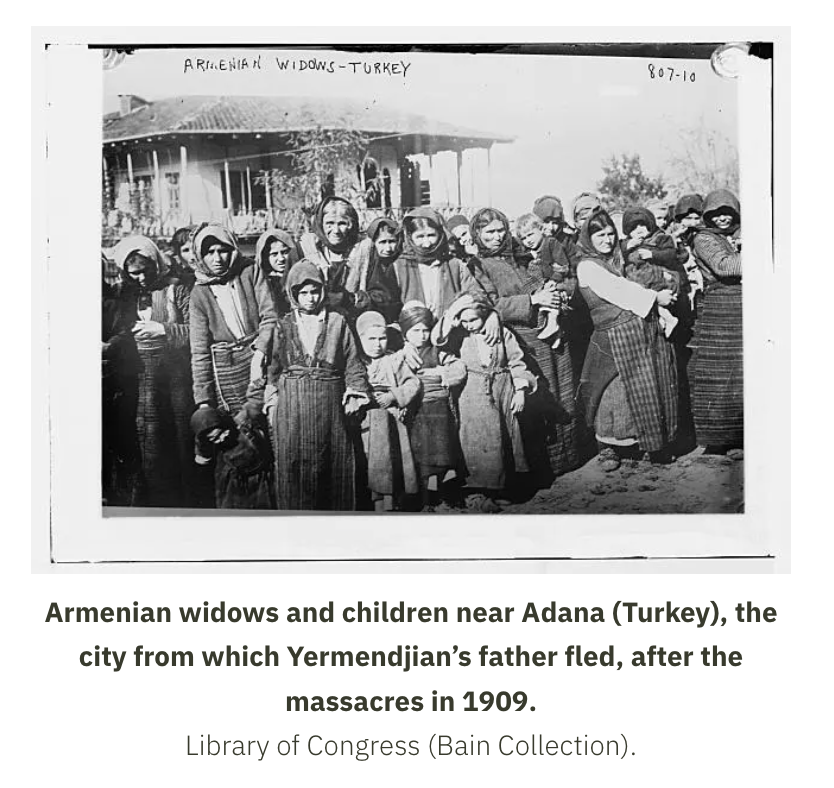
In April of 1909, the death of a Muslim at the hands of a Christian Armenian in Adana provoked the movement of troops into the area to assert order amid tensions fanned by a local Young Turk official. After shots were fired, the military commander ordered retaliation and a building was set on fire with Armenians inside. Two days later, almost the entire Armenian quarter had been destroyed by soldiers and townspeople. Arsen Yermendjian was very likely caught up in the maelstrom. Fleeing to the United States, he arrived in December 1909 at the age of 21. He eventually settled at a shoe-making factory in Philadelphia and married Viola Van Hoff in 1915. In many ways, Arsen was lucky. In 1915, the embattled Ottoman Empire initiated a plan to exterminate all Armenians within its borders, known as the Armenian genocide.
His Mother and the Spanish Flu
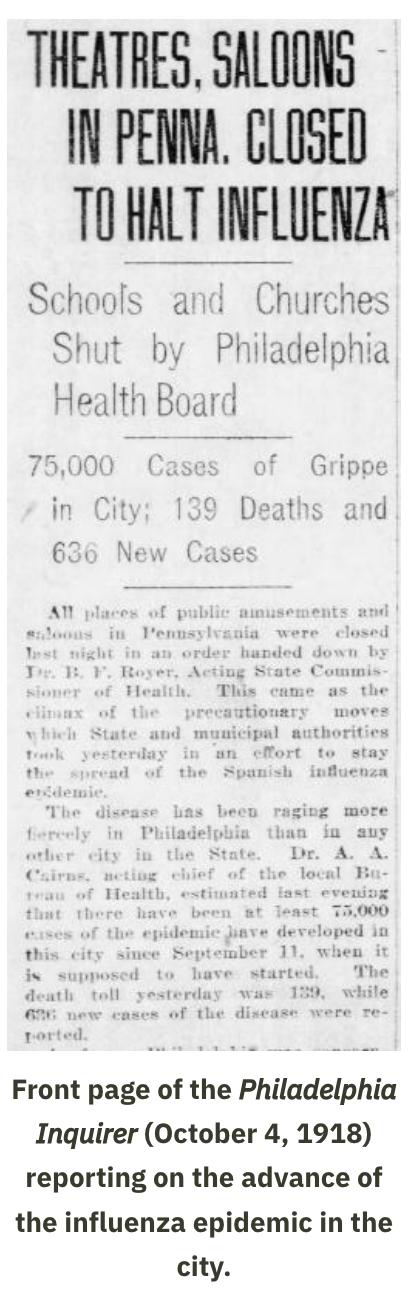
Two years after Marshall Yermendjian was born, his mother, Viola, fell ill and passed away. This occurred during the 1918 “Spanish flu” pandemic that killed over 50 million people worldwide. The flu was particularly lethal for people between the ages of twenty and forty. Viola died when she was 30, soon after the birth of Marshall’s sister.
Philadelphia was hard hit by influenza in the fall of 1918. An article in the Philadelphia Inquirer stated that in less than a month 75,000 cases had been reported. The exact cause of Viola Yermendjian’s death is not documented, but complications from childbirth, strained hospital services, and the Spanish flu could be likely factors. After her mother’s death, Yermendjian, his sister, and his father lived with his maternal grandfather and four aunts in Philadelphia.
Combat and Medical Service in Spain
Marshall Yermendjian’s personal file in the International Brigades shows that he had gained some military experience during three years in the Pennsylvania National Guard (1931-1934). He wrote that he had worked in farms, a textile factory, as an electrician, and had taken courses on taxidermy. He was also asked how he had become “interested in the Proletariat movement.” The document preserves only a sparse reply: “before Spain, friend[s] with union affiliations—discussions.”
Yermendjian professed an interest in the Popular Front, a political movement of communists, socialists, and liberal democrats who found common ground in their opposition to fascism. This interest in the Popular Front movement was shared by many volunteers in the International Brigades who recognized fascism as the greatest threat of their time.
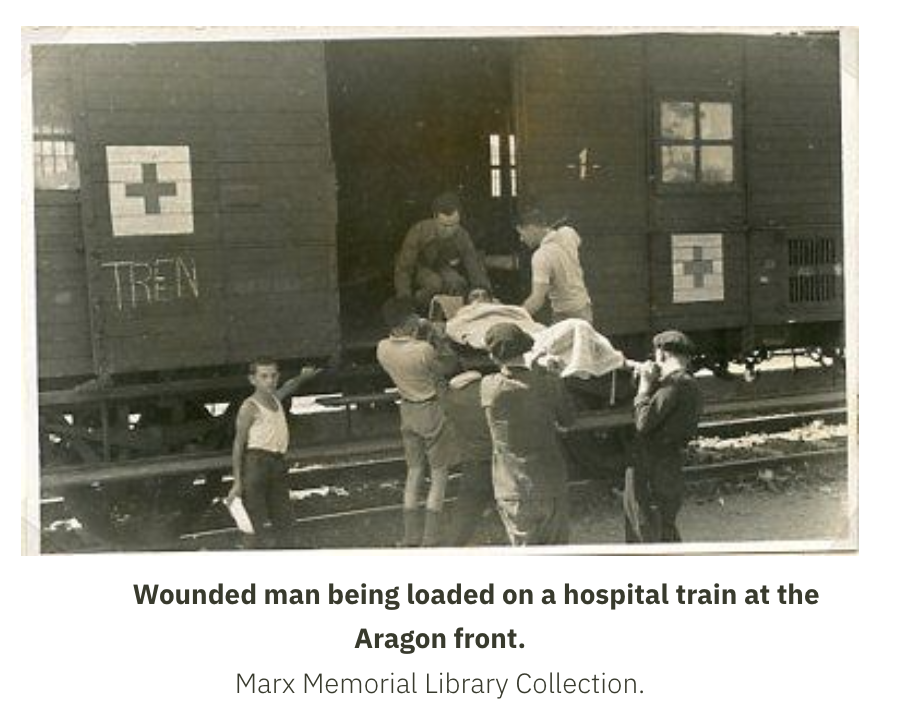
Yermendjian left for Spain in September 1937. He was on the front lines for seven months, including combat at Teruel and Levante. Like Bali Kilas and Peter Reed, two other signatories of the fan, Yermendjian also worked in the International Brigades sanitary service. He delivered medical supplies, drove ambulances and was a stretcher-bearer. His superiors praised him as a “conscientious soldier” and “a very good medic at the front.” He returned to the United States with other signatories of the fan on the President Harding on February 4, 1939.
Change of Name
Marshall Yermendjian went back to Philadelphia and formally changed his name to “Shoemaker.” He had already used Shoemaker in Spain, in late 1938. The changed name probably made paperwork easier due to frequent misspellings such as Yemendijan, Yemendjian, Ydemendjian, and Yermanplian. His new name may have also been a way to honor his family, since Shoemaker referenced his father’s occupation.
During World War II, Marshall Yermendjian, now Shoemaker, served in the U.S. Navy. In 1941, he married Agnes Caughey, a native of Northern Ireland who had moved to the United States via Canada. She died in 1961. In 1986, he married Marie Abruzzo. He worked as a printer at Fidelity Press in Philadelphia before retiring and moving to Florida in 1980. There he became a member of the fraternal organization Eagles Aerie 3997, which supported medical research, hospitals, orphanages, and similar causes. Marshall Shoemaker remained committed to acts of goodwill until the end of his life. He died on September 4, 1997.
FURTHER READINGS
Bedross Der Matossian. 2022. The Horrors of Adana. Revolution and Violence in the Early Twentieth Century. Stanford: Stanford University Press.
Pamela B. Nelson. 1988. “A Brief History of Armenians in America and of the Philadelphia Community.” In Armenian Rugs: Fabric of a Culture. Edited by Pamela B. Nelson. Philadelphia: Balch Institute for Ethnic Studies.
SOURCES
D. P. (Pat) Stephens. 2000. A Memoir of the Spanish Civil War. An Armenian-Canadian in the Lincoln Battalion. Saint John’s, NF: Canadian Committee on Labour History.
Giles Tremlett. 2021. The International Brigades: Fascism, Freedom, and the Spanish Civil War. London: Bloomsbury Publishing.
“Marshall Shoemaker.” Obituary. 1997. Tampa Bay Times. (6 Sept.)
“Marshall Yermendjian.” Personal File. RGASPI. Fond 545, Opis 6. File 1017.
“Marshall Yermendijan.” The Abraham Lincoln Brigade Archives. Biographical Database.
“Philadelphia 1918: The Flu Pandemic Hits Home.” 2020. SKMC Alumni Bulletin.
Project Save Photograph Archive. Preserving the global Armenian experience through photography.
“Theaters, Saloons in Penna. Closed to Halt Influenza.” 1918. Philadelphia Inquirer. (4 October).